

Machines Exceeding Permissible Noise Limits: A Practical Compliance Guide for Plant Heads and HSE Managers
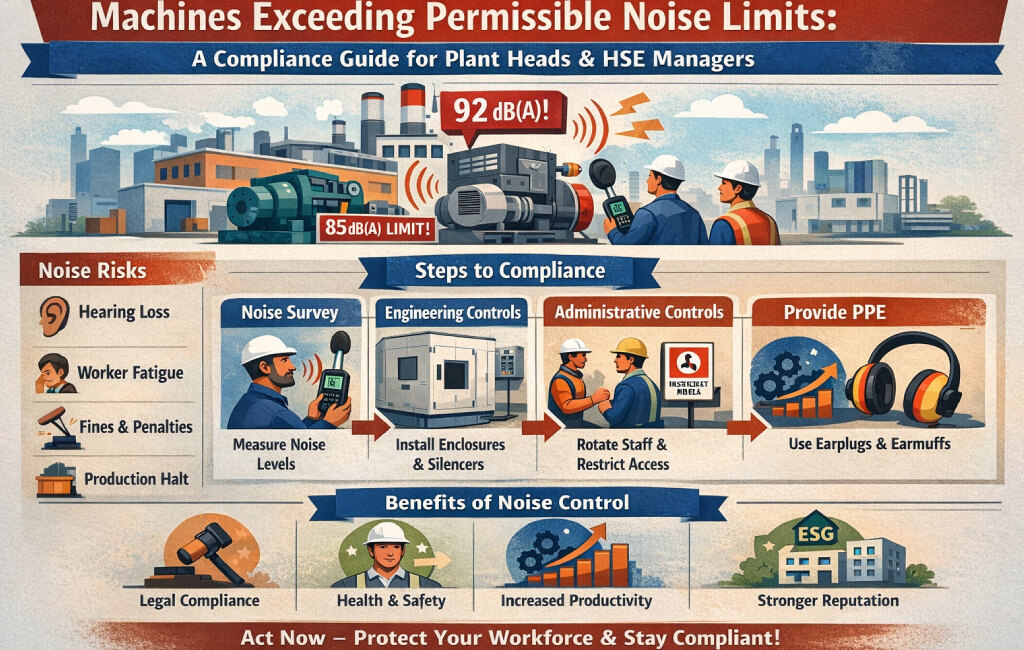
Machines Exceeding Permissible Noise Limits are a growing concern in modern industrial environments. While industrial growth drives productivity and expansion, it also increases noise levels on the shop floor. When equipment crosses permissible exposure limits, plant heads and HSE managers face serious challenges—including regulatory penalties, worker health claims, reduced productivity, and potential compliance failures. Proactive noise control is therefore not just a safety measure, but a strategic operational necessity.
This practical guide will help you understand permissible noise limits, risks, and actionable solutions for effective noise control compliance.
Understanding Permissible Noise Limits in India
In India, workplace noise standards are guided by the Central Pollution Control Board (CPCB) and the Directorate General Factory Advice Service & Labour Institutes (DGFASLI) under the Factories Act.
Key Noise Exposure Limits:
- 85 dB(A) for 8-hour exposure (recommended occupational limit)
- 90 dB(A) for 8-hour exposure (maximum permissible in many industrial contexts)
- Higher decibel levels require reduced exposure time
Exceeding these limits can lead to penalties, worker complaints, factory inspector notices, and even production stoppages.
Why Excessive Machine Noise Is a Serious Concern
1. Health & Safety Risks
Prolonged exposure to high noise levels can cause:
- Noise-Induced Hearing Loss (NIHL)
- Increased stress and fatigue
- Reduced concentratio
- Higher accident probability
2. Legal & Compliance Risks
If noise levels exceed limits:
- Government notices and penalties
- Factory license suspension
- Increased inspection frequency
3. Productivity & Reputation Risks
High noise levels:
- Reduce communication efficiency
- Increase operator fatigue
- Affect machine monitoring accuracy
In sectors like automotive, pharmaceuticals, and heavy engineering, excessive noise can also impact corporate ESG scores and brand perception.
4 Identifying Noise Sources in Industrial Plants
The following machines frequently exceed 85–95 dB(A):
- Air compressors
- DG sets (diesel generators)
- Centrifugal blowers
- Stamping and forging presses
- Turbines and pumps
Without proper acoustic treatment, these machines can easily cross safe exposure limits.
Step-by-Step Compliance Strategy for Plant Heads & HSE Managers
Step 1: Conduct a Noise Survey
Carry out a detailed noise mapping study using calibrated sound level meters. Identify:
- Source noise levels
- Worker exposure duration
- High-risk zones
A third-party acoustic audit improves credibility and documentation.
Step 2: Implement Engineering Controls (Preferred Solution)
Engineering controls are more effective than PPE. Consider:
- Acoustic Enclosures – Designed to contain machine noise at the source, acoustic enclosures can reduce noise by 15–35 dB(A) depending on design and material.
Benefits:
- Long-term compliance
- Improved worker comfort
- Lower dependency on PPE
for compressors and DG sets
- Silencers / Sound Attenuators – Used for intake and exhaust systems, these significantly reduce airflow-generated noise.
for blowers and exhaust systems
- Acoustic Barriers & Panels – Ideal for partial machine isolation in large manufacturing areas.
- Vibration Isolation Pads – Anti-vibration pads and mounts reduce structure-borne noise transmission. These solutions can reduce noise levels by 10–35 dB depending on design quality.
Step 3: Administrative Controls
If engineering control is partially implemented:
- Rotate staff exposure
- Limit high-noise area access
- Display noise hazard signage
Step 4: Provide PPE (Last Line of Defense)
Earplugs and earmuffs help reduce exposure but should not replace engineering controls. PPE compliance alone is not sufficient during inspections if source noise remains excessive.
Documentation & Audit Readiness
To ensure smooth audits and inspections
- Maintain noise survey reports
- Keep calibration certificates of sound meters
- Document noise reduction measures
- Record PPE training sessions
- Maintain equipment maintenance logs
Proper documentation protects the organization during statutory inspections.
Final Thoughts: Compliance Is a Leadership Responsibility
For Plant Heads and HSE Managers, managing industrial noise is a proactive leadership function—not just a statutory requirement. Machines exceeding permissible noise limits are not merely a safety issue; they represent operational inefficiency and regulatory risk.
Investing in acoustic engineering solutions such as enclosures, attenuators, and vibration isolation systems delivers long-term benefits:
- Legal compliance
- Healthier workforce
- Improved productivity
- Stronger corporate reputation
If your plant has machines operating above 85 dB(A), now is the time to act. A structured noise control strategy today prevents penalties and protects your workforce tomorrow.
Machines Exceeding Permissible Noise Limits can lead to compliance risks, operational inefficiencies, and serious workplace health concerns if not addressed promptly. Thermosonics Pvt. Ltd. stands as a trusted name in India for advanced noise measurement, detailed acoustic analysis, and effective mitigation solutions. We deliver data-driven assessments and engineered noise control systems that help industries achieve regulatory compliance and long-term performance improvement. Get in touch with us today to ensure your plant operates within permissible limits and provides a safer, more productive working environment.
0 Comments